Leave of absence, logged at the source
Doctors at Dialogue wrote the same leave of absence twice, and the care team interpreted it by hand. I replaced both with one structured form inside the consult note, so signing it triggers everything that used to be manual.
What I owned: planning and running the research, concept development, the final solution design, and the training documentation, written with medical operations and the product manager.
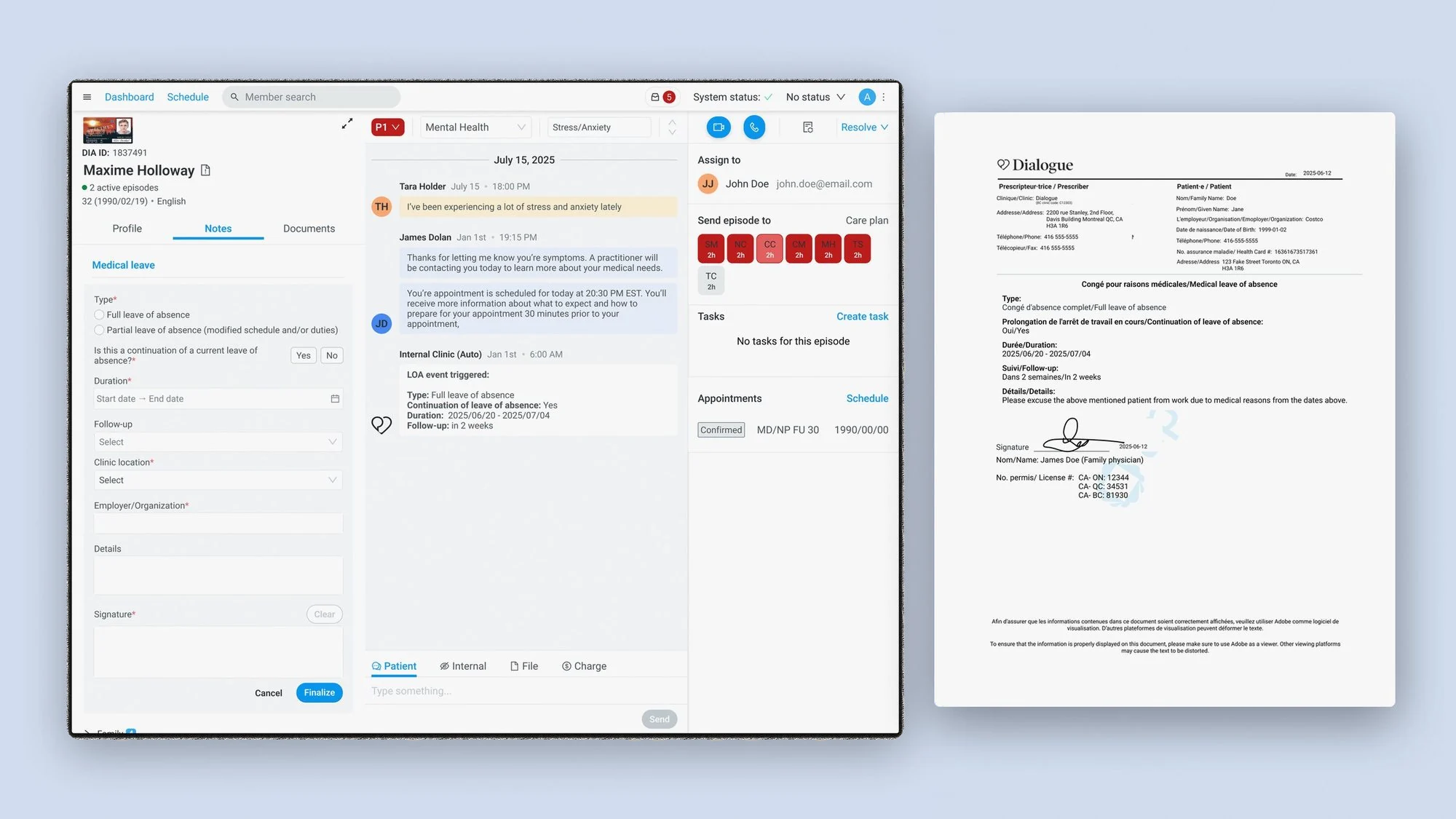
- The tension
- For 80–100+ leaves a week, doctors filled out an attestation form and then retyped the same details in free text. The care team had to read every note to work out what to do. Anything unclear meant missed follow-ups and unlogged leaves, and patients waited on a busy queue for the documents they needed to start their leave.
- The turn
- Research showed the real failure was the handoff between doctors and operations, not the doctors' workflow. So I designed one structured Medical leave form inside the consult note, using a pattern doctors already knew from prescriptions.
- Where it landed
- Doctors went from 6 steps to 2 (fill in, sign). The PDF, patient message, internal note, record and care team tasks now happen automatically, and every leave is logged.
Problem
Written twice, handed off, read by hand
Every leave crossed two teams, and the details were copied, handed off and reinterpreted along the way. Doctors prescribed 80–100+ a week. Shadowing both teams, I mapped the full chain.
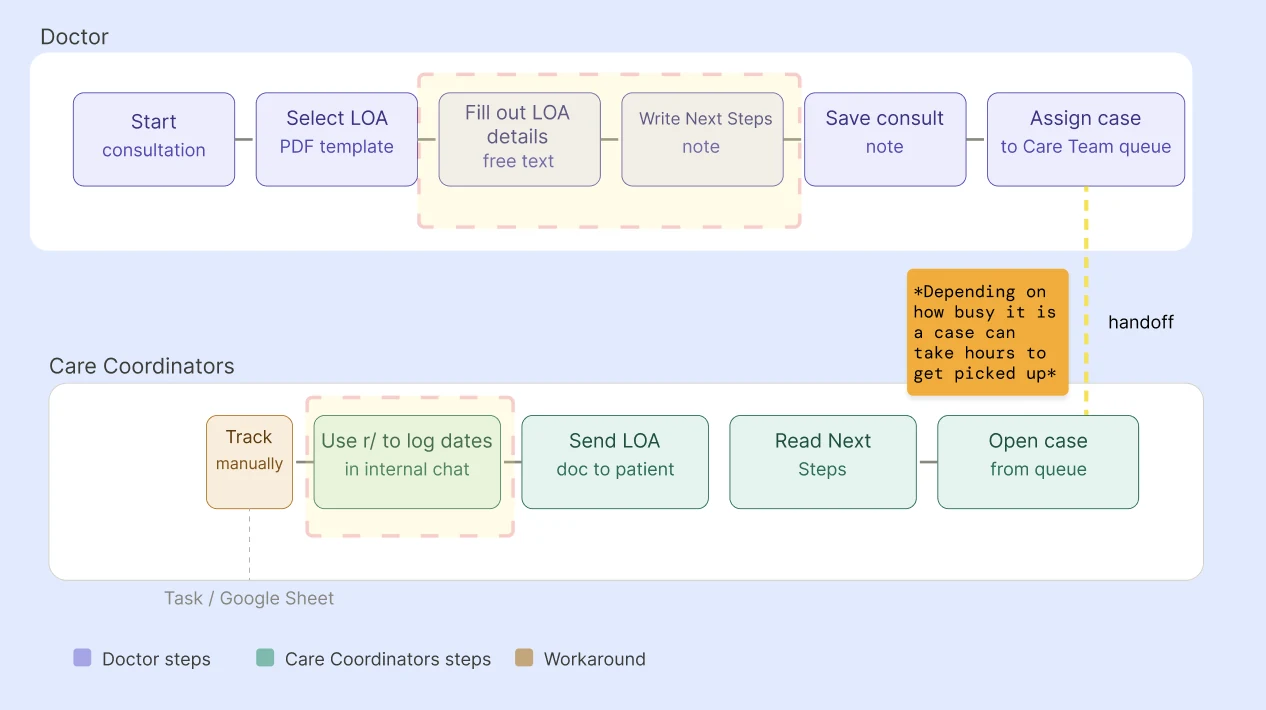
On top of that, enterprise clients got incomplete reporting, with no reliable data on their workforce's health.
"There's no reliable way to know what to act on. Every practitioner does this differently."Stephanie M., M.D.
Research
The break was in the handoff
I started out treating this as a doctor problem: too many manual steps, too much room for error. Shadowing both teams and interviewing doctors and operations changed that.
- 1
Doctors weren't skipping steps out of carelessness.
The system gave them no structured path, so each one documented leaves their own way.
- 2
The care team needed to know when to act, not just what to do.
They had built informal workarounds just to keep track of active leaves, and those workarounds didn't scale.
- 3
The handoff was where it fell apart.
The gap between what a doctor documented and what operations could act on was the core failure point.
The reframe. This wasn't about fixing a doctor's workflow. It was about creating one source of truth that served both sides of the care team, captured at the moment the leave was prescribed.
How might we capture a leave once, in a form the system can read, without adding work for doctors?
Exploration
Pull data out, or put it in?
I explored three concepts. The first two tried to pull structured data out of the documents doctors already made.
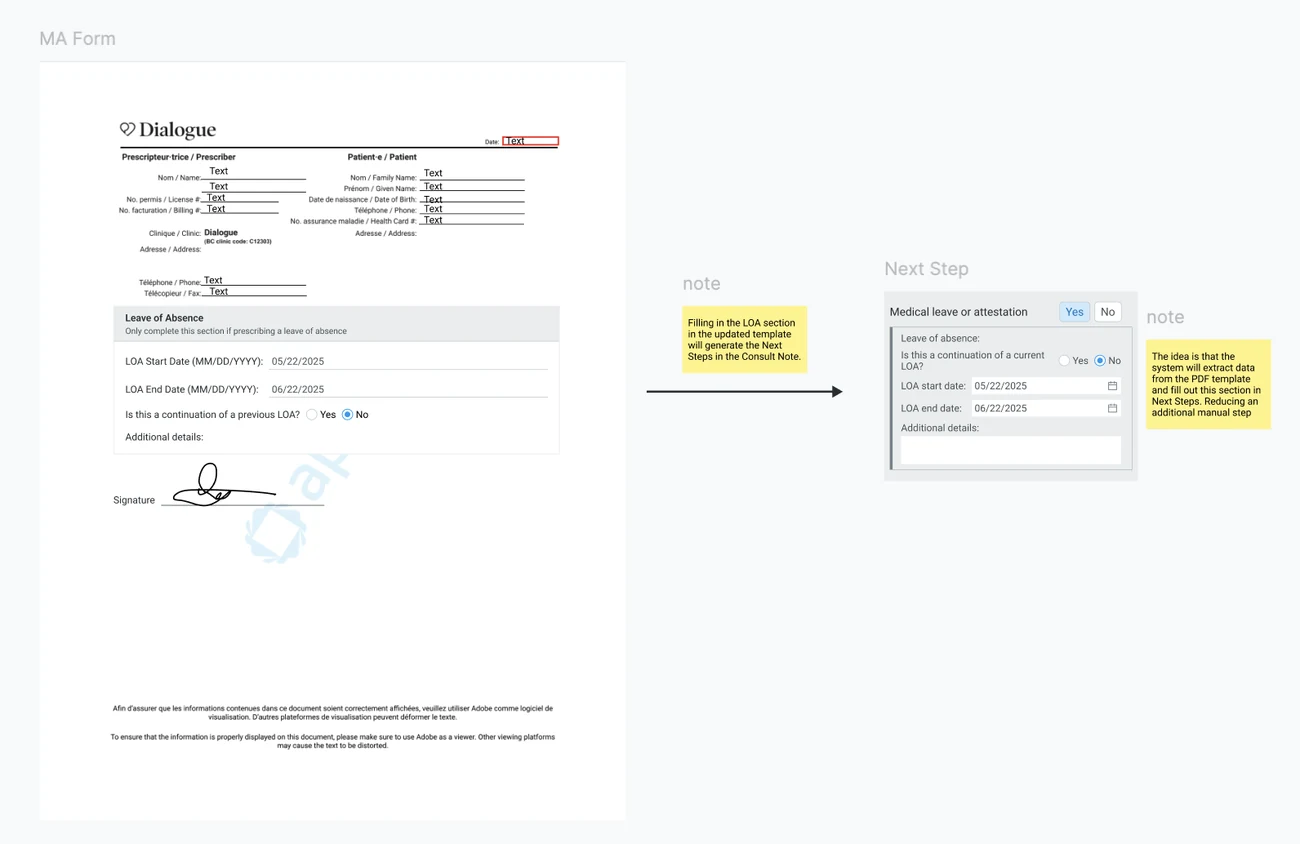
Structured PDF template
A Leave of Absence section with fixed fields in the Medical Attestation form, which the system reads to fill in Next Steps.
- Structured input beats free text
- Parsing data out of a PDF proved unreliable for our system
- Doctors had to judge when the section applied

Structured Next Steps
Free-text Next Steps replaced with a "Medical leave or attestation" section: type, continuation, dates.
- Easy for the system to read
- Still redundant: doctors fill out the attestation form, then enter the same details again
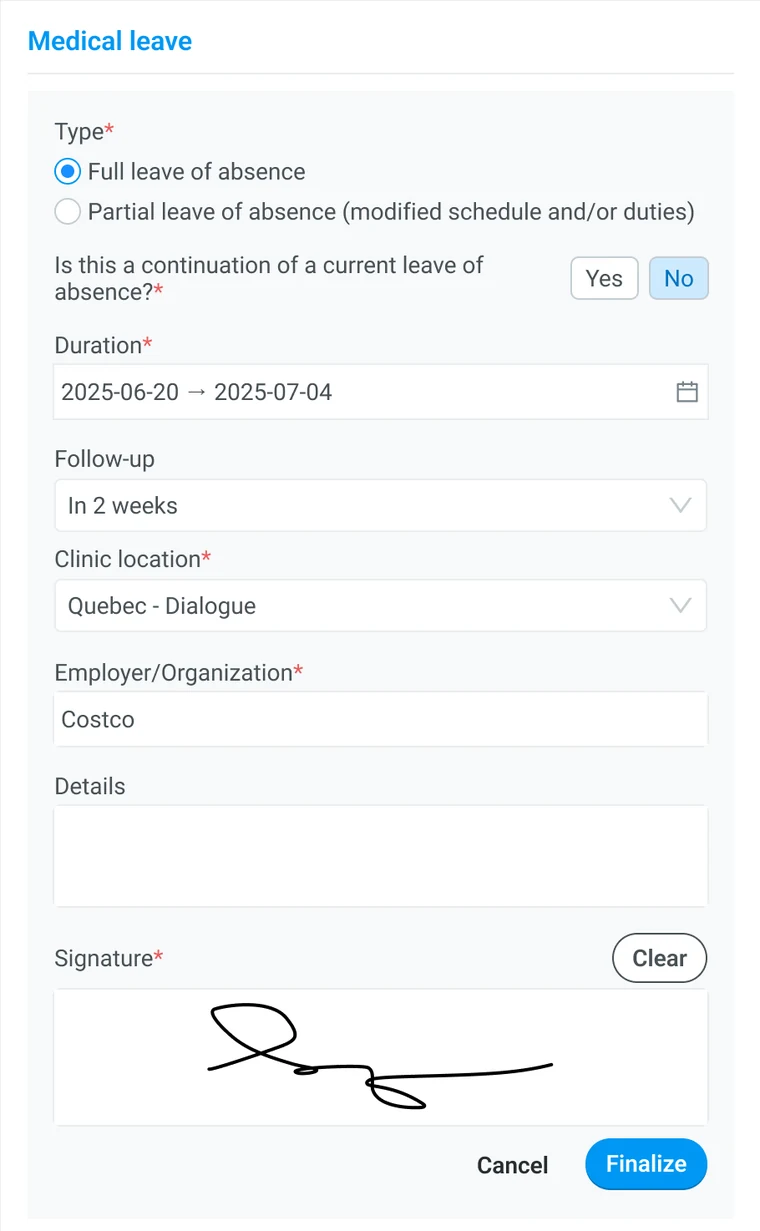
Medical leave form in the consult note
One structured form that generates the PDF and everything else.
- One entry for the doctor
- One source of truth for the system
- A pattern doctors already knew from prescriptions
The chosen design reversed the flow: capture the structured data once, and generate the documents from it.
The pushback
The technical team questioned whether the automation could be ready for launch, or whether the solution was too complex. I worked closely with our engineers and the data team to shape a workflow that kept the core of the idea, the system recognizing the leave as an event inside the doctor's workflow, and made sure every automated output was correct before launch.
Solution
Fill it in, sign it. The rest happens on its own.
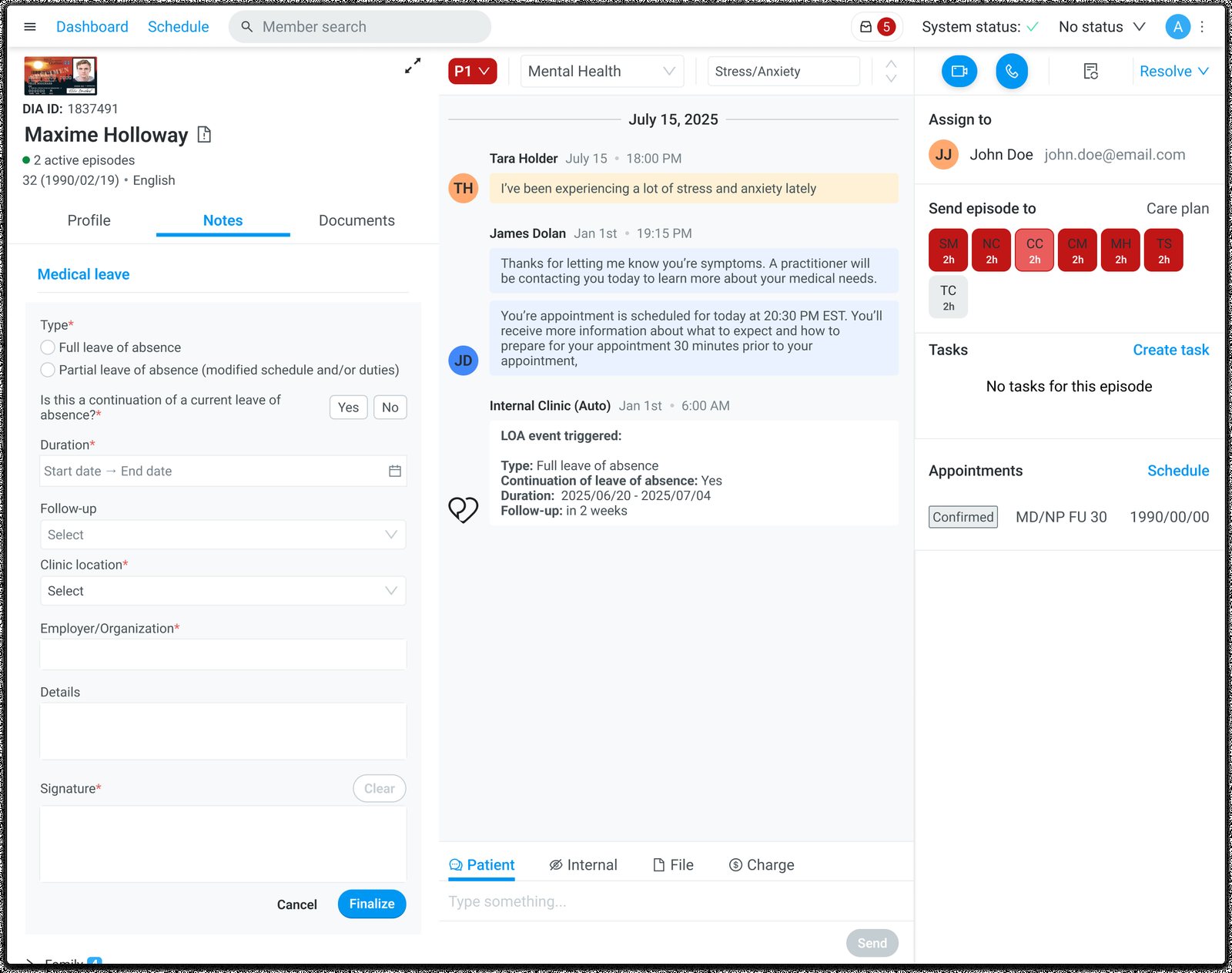
One structured Medical leave form, inside the consult note, built on the prescription pattern doctors already used every day. Try it: it plays on its own, and takes over the moment you click in.
Open the Medical leave section of the consult note.
Generate the leave of absence PDF
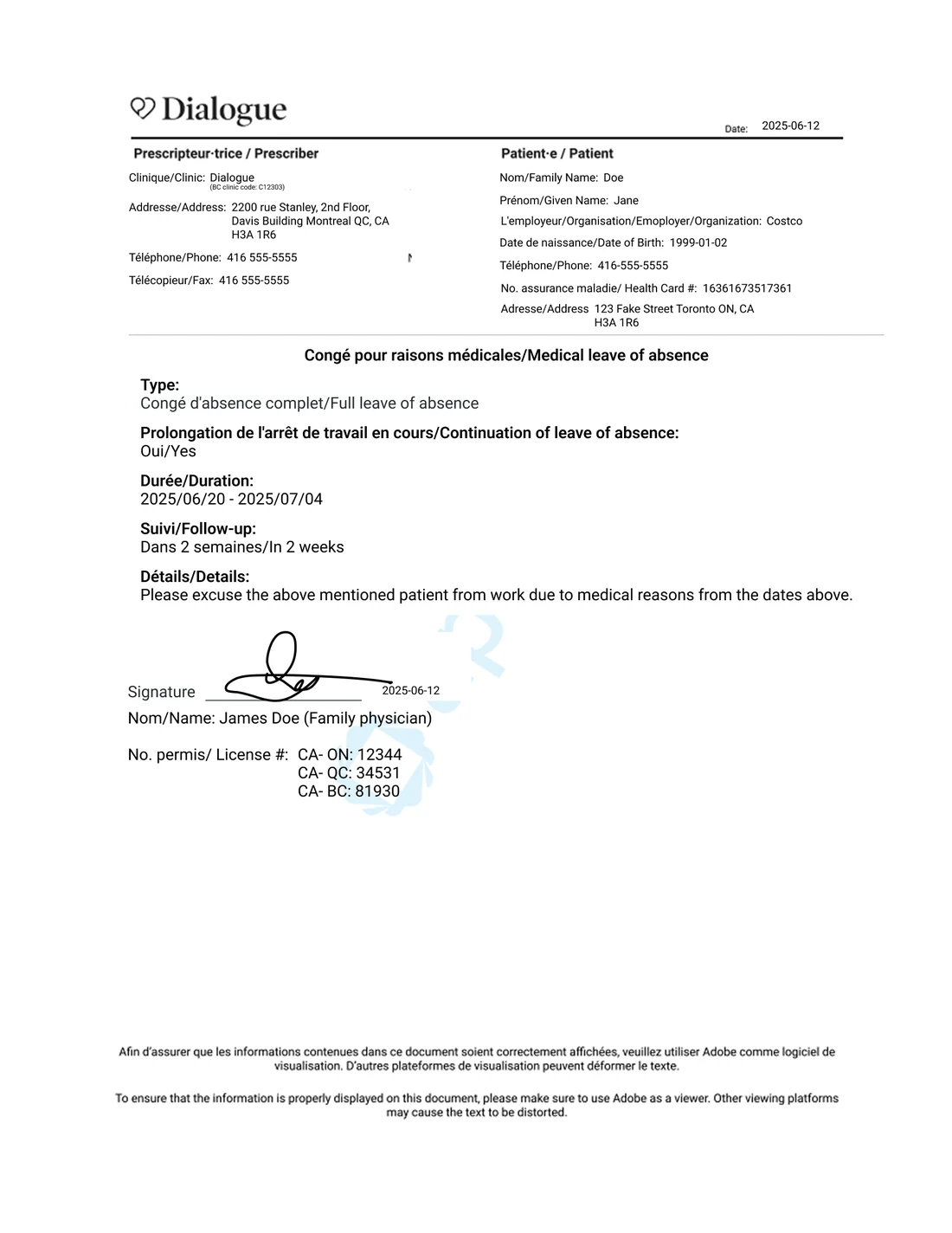 Medical_leave.pdf
Bilingual, signed, ready for the employerSend the document to the patient in chat
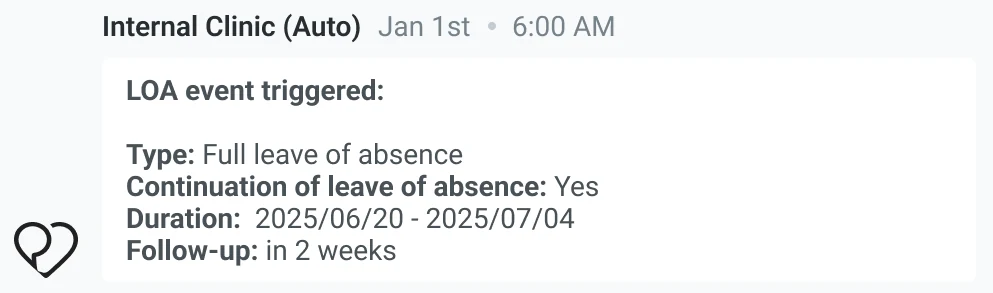
Your medical leave document is ready. You can share it with your employer.📄 Medical_leave.pdfPost the internal message for the care team
Internal Clinic (Auto)
LOA event triggered:
Type:
Continuation of leave of absence:
Duration:
Follow-up:Record the leave in the patient's profile
Event Dates Employer Status Leave of absence Logged Create tasks for care coordinators
☑ Book follow-up ·
What it produces
Before and after
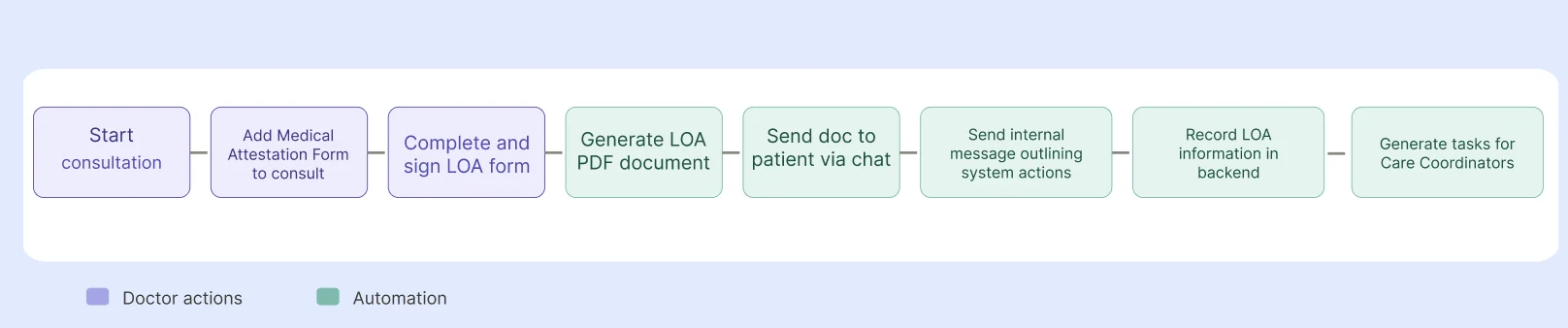
The doctor's part shrinks to starting the consultation, adding the Medical Attestation form, and completing and signing it. Everything the care team used to do by hand now happens the moment the form is signed, with no handoff or queue in between.
Impact
Captured once, at the source
Every leave is now captured at the moment it's prescribed, with nothing left for the care team to interpret.
The care team's manual leave workflow is fully automated. For the business, enterprise clients now get reporting built on structured, real-time data instead of incomplete records. And with care coordinators no longer reading notes and logging leaves by hand, the time saved on the task came to roughly $80k a year.
Reflection
Follow the cost, not the complaint
The person feeling the pain isn't always where the problem starts. Doctors felt the paperwork, but the cost landed on operations, and only fixing the handoff between them solved it for both.
What I'd do differently
Talk to operations first. I scoped this as a doctor problem and only found the real one in interviews. Starting from the downstream team would have reached the reframe sooner.
Design the reporting with clients in the loop. Clients were the end consumers of this data, and their input on the reporting format would have shaped which fields the form captures.
What's next
Show leave history and status in the patient's profile, reuse the same event-logging pattern for other clinical events, and tie employer reporting to care outcomes.